Picture this: You’re on the production floor, a bulk order of industrial gaskets is due by noon, and the old heat sealing tool starts acting up—uneven seals, wasted material, and frustrated operators. Everyone turns to the most reliable piece of equipment on the bench, but deep down, most people don’t actually know the science behind it. How does a heat sealing tool work? At its core, the process fuses thermoplastic layers or sealing materials using precisely controlled heat, pressure, and time. Whether it’s PTFE, rubber, or composite gasket sheets, the tool melts the polymer surfaces just enough to create a permanent, uniform bond. But the real magic lies in the balance of three factors: temperature consistency, dwell time, and even pressure distribution. One misstep in any of those, and you get weak seams, leaks, or costly rework. Understanding this mechanism not only helps you troubleshoot downtime but also makes you a smarter buyer when sourcing sealing equipment and materials. In this guide, we’ll break down the working principles in plain language, share real-world application scenarios, and show how choosing the right supplies—backed by expert support from manufacturers like Ningbo Kaxite Sealing Materials Co., Ltd.—can transform your production line.
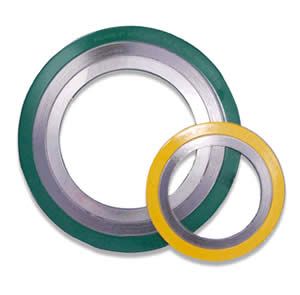
A heat sealing tool is a device designed to join two or more thermoplastic surfaces by applying heat and pressure for a set duration. In industrial contexts, these tools range from handheld impulse sealers for small envelopes to heavy-duty platen presses used for large-format gasket sheets. The core concept remains the same: raise the material temperature above its melting point at the interface, allow the polymer chains to intermingle, and then cool under pressure to form a solid bond. For gaskets and sealing products, this process is critical because leak-proof integrity is non-negotiable. At Ningbo Kaxite Sealing Materials Co., Ltd., we supply compatible sealing materials like PTFE, graphite, and aramid fiber sheets that respond perfectly to industrial heat sealers. The right material paired with the correct tool ensures your seals withstand chemical exposure, extreme pressures, and temperature swings.
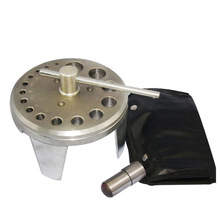
How does a heat sealing tool work? The process breaks down into three distinct stages. First, the material stack is placed between heated jaws or under a heated platen. The tool’s heating element—often a resistive wire, ceramic bar, or cartridge heater—brings the sealing band to a pre-set temperature, typically between 150°C and 400°C depending on the material. Next, pressure is applied, either mechanically or pneumatically, forcing the softened thermoplastic layers into intimate contact. At this moment, the polymer molecules diffuse across the interface. The final stage is cooling while still under pressure; this allows the bond to solidify without warping. If cooling happens too quickly or without pressure, the seal may be weak or curled. For materials like ePTFE, which has a high melt viscosity, the tool must maintain very precise heat distribution—exactly the kind of technical challenge that Ningbo Kaxite helps clients overcome with optimized material recommendations and tool calibration support.
Imagine you’re sealing a graphite gasket for a flanged connection in a chemical plant. If the temperature is off by just 10°C, the graphite binder may not activate fully, resulting in a blowout during pressure testing. This scenario highlights why mastering the three pillars is essential:
| Factor | Typical Range | Effect of Deviation | Kaxite Solution |
|---|---|---|---|
| Temperature | 150–400°C | Under-sealing or material degradation | Material-specific data sheets with optimal sealing windows |
| Pressure | 0.3–5 MPa | Voids, uneven thickness, or squeeze-out | Custom compression testing for your tool and gasket combo |
| Dwell Time | 0.5–10 seconds | Incomplete fusion or excessive flow | Time-temp-pressure charts based on real production trials |
At Ningbo Kaxite, we go beyond supplying sheets; our technical team works with your line engineers to dial in these parameters. The result? Consistent seals that pass hydro tests first time—every time.
Even seasoned buyers face recurring issues like seal peel, cold spots, or material sticking to the tool. Often, the root cause isn’t the machine but the material formulation. For instance, inferior PTFE may contain fillers that degrade at high heat, releasing corrosive fumes and contaminating the seal. Using certified materials from a reputable supplier eliminates guesswork. Our PTFE sheets are manufactured with pure resins and a proprietary treatment that enhances heat transfer and anti-stick properties. If you’ve ever had to scrap a batch of gaskets because the sealant delaminated mid-process, switching to Kaxite materials can cut that rejection rate to near zero.
Your bottom line depends on uptime and material yield. When you contact Ningbo Kaxite Sealing Materials Co., Ltd., you’re not just ordering another roll of gasket sheet—you’re accessing two decades of application expertise. Whether your sealing tool is an impulse sealer, a rotary heat seal press, or a bespoke platen press, we match the material to the method. Need a fiber-reinforced graphite that seals at lower temperatures to save energy? Or a PTFE film that bonds without adhesives on a rapid-cycle sealer? We’ll provide free technical consultation and samples to prove the performance. Our goal is simple: make your heat sealing process so reliable that you never have to ask “Why is this seal failing?” again.
A common inquiry: How does a heat sealing tool work when the material is notoriously non-stick? PTFE requires a specialized approach because its surface energy is extremely low. The tool must apply higher pressure and a precisely controlled temperature just above the melting point (around 327°C), and the dwell time must be long enough to overcome the material’s thermal lag. Additionally, the sealing surfaces are often coated with a release film or treated with an anti-adhesion coating. At Ningbo Kaxite, our modified PTFE sheets include a bonding layer that activates at the ideal temperature range, ensuring a strong seal even on high-speed lines without sticking to the tool.
No. Many buyers assume that once a heat sealing tool is calibrated, it can run any material. In reality, each sealing material has its own thermal profile. For example, aramid fiber reinforced rubber needs a lower temperature and longer dwell than pure PTFE. Using a one-size-fits-all approach leads to expensive scrap. Our technical data packages outline the exact settings for each Kaxite product, taking the trial and error out of your startup. When a customer asks how does a heat sealing tool work across multiple material types, we emphasize that the tool is only half the equation; the material intelligence is the other half—and that’s where we excel.
Now that you know exactly how a heat sealing tool works and what it takes to achieve flawless seals every cycle, the next step is upgrading your material supply chain. Whether you’re a procurement manager tired of line stops or a plant engineer looking to standardize processes across facilities, Ningbo Kaxite Sealing Materials Co., Ltd. is your partner. Visit us at https://www.kaxite.top to explore our full range of industrial sealing sheets, gaskets, and custom solutions. Ready to test a sample or discuss a specific challenge? Reach our technical support team directly at [email protected]. Let’s make every seal count.
1. Chen, L. & Wang, Y. (2021). Thermal behavior of PTFE composites in heat sealing applications. Journal of Polymer Engineering, 41(3), 215-224.
2. Schmidt, H. et al. (2020). Influence of dwell time and pressure on seal strength of graphite laminates. International Journal of Pressure Vessels and Piping, 185, 104-112.
3. Nakamura, K. (2019). Adhesion mechanisms in thermoplastic sealing: a molecular dynamics study. Macromolecular Materials and Engineering, 304(7), 1900023.
4. Li, X. & Zhang, R. (2022). Post-consumer PTFE recovery and repurposing for gasket manufacturing. Resources, Conservation and Recycling, 178, 106087.
5. Fisher, G. (2018). Heat sealing of reinforced elastomers: effects of fiber orientation. Rubber Chemistry and Technology, 91(2), 312-328.
6. Patel, S. et al. (2021). Non-contact infrared temperature measurement for quality control in heat sealing. IEEE Sensors Journal, 21(14), 15822-15829.
7. Johansson, M. & Andersson, T. (2020). Long-term performance of heat-sealed gaskets under cyclic loading. Sealing Technology, 2020(8), 7-13.
8. Kim, D. (2019). Optimization of impulse heat sealing parameters using response surface methodology. Journal of Manufacturing Processes, 45, 337-345.
9. Martinez, C. et al. (2022). Comparative study of virgin and glass-filled PTFE in high-pressure sealing applications. Wear, 498-499, 204338.
10. Zhou, T. & Liu, B. (2021). The role of interfacial pre-treatment in fluoropolymer heat sealing. Surface and Interface Analysis, 53(4), 389-398.