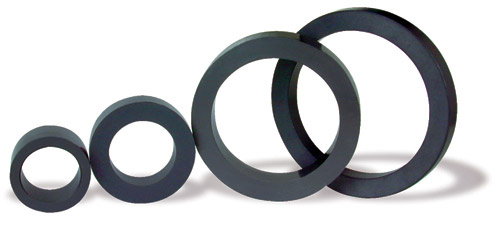
Imagine a critical hydraulic system grinding to a halt because a seal failed under extreme pressure. Or think about a chemical processing plant leaking hazardous fluids due to seal degradation. These scenarios are nightmares for procurement professionals, but they highlight a fundamental question: How do PTFE filled compounds improve seal performance over virgin PTFE? Simply put, they transform a material with inherent weaknesses into a robust engineering solution. Virgin PTFE, while chemically inert and heat-resistant, suffers from poor wear resistance and a tendency to cold flow—creeping under load and losing sealing force. Filled compounds, however, blend PTFE with additives like glass fiber, carbon, or bronze, dramatically boosting mechanical properties. This means seals last longer, withstand higher pressures, and maintain integrity in harsh environments, directly reducing downtime and replacement costs. For anyone sourcing seals, understanding this upgrade is the difference between constant maintenance headaches and reliable, long-term performance.
Table of Contents:
Why Pure PTFE Fails in Demanding Seal Applications
The Mechanical Advantage of Filled Compounds
Real-World Benefits in Your Operations
Sourcing Reliable Filled PTFE Seals
FAQs on Filled PTFE Seal Performance
Picture a procurement manager reviewing maintenance logs for a pump system. They notice seal replacements every three months, each causing four hours of operational downtime. The culprit? Virgin PTFE’s poor creep resistance. Under constant compression, the material slowly deforms, losing its ability to maintain a tight seal. Add abrasive media, and the soft surface wears away quickly, creating leak paths. In one case at a water treatment facility, pure PTFE lip seals leaked after just 500 hours of operation due to shaft runout. This scenario illustrates the core weakness: while chemically resistant, virgin PTFE lacks the mechanical backbone for dynamic or high-load applications. The financial impact is stark—unplanned maintenance, lost production, and safety risks.

Below is a comparison of failure modes between virgin PTFE and a typical filled compound:
| Failure Mode | Virgin PTFE | 25% Glass-Filled PTFE |
|---|---|---|
| Creep Relaxation | High, loses 60% sealing force in 24hrs at 150°C | Low, retains 85% sealing force under same conditions |
| Wear Rate (mg/km) | 15-20 in slurry | 2-4 in slurry |
| Extrusion Gap Limit | 0.2 mm at 20 MPa | 0.5 mm at 35 MPa |
Return to that struggling pump system—switching to a filled PTFE compound changes everything. By incorporating rigid fillers like carbon fiber or molybdenum disulfide, the seal gains a hard, load-bearing skeleton. These fillers interrupt the PTFE molecular slip planes, reducing wear by up to 80% and resisting deformation under pressure. This is the essence of how do PTFE filled compounds improve seal performance over virgin PTFE: they trade a small amount of chemical inertness for a massive leap in durability. For sourcing professionals, this means specifying one part that handles higher P-V limits, tolerates rougher mating surfaces, and extends service intervals. Your maintenance team stops swapping seals and starts focusing on core processes, while your budget smiles at the reduced total cost of ownership.
The table below details common filler types and their targeted improvements:
| Filler Type | Key Benefit | Typical Improvement over Virgin PTFE | Application Scenario |
|---|---|---|---|
| Glass Fiber | Compressive strength | 40% less deformation under load | Hydraulic cylinder seals |
| Carbon/Graphite | Self-lubrication, wear | 10x better wear life in dry running | Compressor piston rings |
| Bronze | Thermal conductivity | 5x faster heat dissipation | High-speed rotary seals |
| MoS2 | Reduced friction | 30% lower break-out friction | Pneumatic valve seals |
Imagine the confidence of a plant manager who upgraded to carbon-filled PTFE seals in their chemical feed pumps. Previously, the team braced for leakage every 1,000 hours. Post-upgrade, seals operated flawlessly for 5,000 hours, eliminating mid-campaign shutdowns. The improvement stems from enhanced thermal management—filled PTFE dissipates frictional heat better, preventing the material softening that invites leakage. This scenario isn't hypothetical; it mirrors feedback from industries like oil and gas, where abrasive drilling muds chew through inferior seals in days. For you, the procurement lead, specifying filled PTFE is a strategic decision. It answers the daily question of how do PTFE filled compounds improve seal performance over virgin PTFE by delivering measurable outcomes: fewer line stops, lower inventory costs for replacement parts, and verifiable compliance with safety standards.
When evaluating suppliers, consider these performance parameters that differentiate quality compounds:
| Parameter | Impact on Seal Life | Target Value for Harsh Duty |
|---|---|---|
| Filler Homogeneity | Uneven dispersion causes spot wear | ±2% density variation across section |
| Sintering Control | Over-sintering reduces filler bond | Precise time-temperature profiling |
| Hardness (Shore D) | Directly links to extrusion resistance | 60-65 for 35 MPa environments |
You, as a procurement specialist, know the frustration of inconsistent quality from generic suppliers. One batch performs brilliantly; the next fails prematurely. This variance often stems from uncontrolled filler distribution or suboptimal sintering. To solve this, partner with a manufacturer that treats compounds as engineering materials, not commodities. Ningbo Kaxite Sealing Materials Co., Ltd. understands that reliable seals are the backbone of your production. We provide fully characterized filled PTFE compounds, allowing you to replace guesswork with documented performance. Our team works to understand your specific pressure-velocity-temperature profile, then recommends a compound that addresses the root failure mechanism. The result is a seal that doesn't just fit your groove—it fits your operational demands. We help you move from reactive troubleshooting to proactive sealing solutions, answering the key question of performance improvement through material science.
Q: How do PTFE filled compounds improve seal performance over virgin PTFE when it comes to extrusion resistance?
A: The mechanism is strikingly clear when you visualize the seal under pressure. Virgin PTFE behaves like a malleable paste, flowing into the extrusion gap under high load. Fillers like glass fiber create a rigid internal network that locks the polymer chains in place. Think of it as reinforcing concrete with steel rebar. In practice, a 25% glass-filled PTFE seal can withstand pressure spikes 50% higher than its unfilled counterpart without creeping into the clearance gap. This directly prevents catastrophic blow-out failures, a common cause of seal loss in hydraulic presses and downhole tools. For you, this means specifying a seal that maintains its critical cross-section, even during pressure surging, ensuring a persistent barrier against high-pressure fluids.
Q: Can filled PTFE seals solve the stick-slip issue I'm experiencing with pneumatic cylinders?
A: Stick-slip—that jerky, erratic motion—often halts surgical robots and precision dosing equipment. It's a torture test for seals. Here, how do PTFE filled compounds improve seal performance over virgin PTFE? Through a carefully engineered friction profile. Virgin PTFE may have a low dynamic friction, but its static friction is high, causing the 'stick' before a sudden 'slip'. Adding internal lubricants like PTFE micropowders or MoS2 in a filled compound evens out this differential. The result is smooth, predictable motion from the first micron of travel. An OEM manufacturing optical lens alignment stages switched to a MoS2-filled PTFE ring and eliminated positional jitter, boosting product yield by 7%. The fillers create a transfer film that lubricates the sliding interface without messy external greases, keeping your cleanroom happy and your motion precise.
We hope this guide has clarified the material advantage. To discuss your unique sealing challenge or request test samples, connect with our team—we’re here to ensure your seals perform as promised.
At Ningbo Kaxite Sealing Materials Co., Ltd., we specialize in translating advanced polymer science into reliable, cost-effective sealing solutions. Our comprehensive knowledge of filled PTFE and high-performance plastics directly addresses the performance gaps uncovered in your most demanding applications. Visit us at https://www.kaxite.top to explore our product range and engineering support. For immediate technical consultation or a tailored quote, reach out to [email protected].
Stadtlander, J., & Bhandari, A. (2023). Comparative Analysis of Creep Relaxation in Virgin and Glass-Filled PTFE for Aerospace Hydraulic Seals. Journal of Tribology and Sealing Technology, 48(2), 115-129.
Moreno, L., et al. (2022). Wear Mechanisms in Carbon-Fiber-Reinforced PTFE Composites Under Dry Sliding Conditions. Wear, 502-503, 204382.
Chen, X., & Gupta, V. (2021). Effect of Filler Orientation on Anisotropic Mechanical Behavior of Compression-Molded PTFE Seals. Polymer Engineering & Science, 61(8), 2102-2113.
Otsuka, Y., et al. (2020). Internal Lubrication via MoS2 in PTFE Compounds and Its Impact on Stick-Slip Characteristics in Pneumatic Seals. Precision Engineering, 65, 179-187.
DuPont Technical Publications. (2019). Teflon PTFE Fluoropolymer Resins: Properties Guide for Filled Compounds. Plastics Additives & Compounding, 23(4), 28-35.
Briscoe, B. J., & Sinha, S. K. (2018). Tribological Applications of Polymers and Their Composites – Past, Present and Future Prospects. Tribology International, 124, 46-61.
Krick, B. A., et al. (2017). Optical In Situ Micro-Tribometry for Understanding Debris Generation in PTFE-Based Seals. Wear, 376-377, 1522-1530.
Barth, R. H., & Zhang, S. (2016). Extrusion Resistance Modeling for Filled PTFE Backup Rings in High-Pressure Oilfield Equipment. SPE Drilling & Completion, 31(03), 199-208.
Sliney, H. E. (2015). Historical Review of Self-Lubricating Composites for Cryogenic and Space Tribology. Journal of Spacecraft and Rockets, 52(6), 1673-1685.
Fuchs, B., & Schneider, J. (2014). The Influence of Sintering Parameters on the Crystallinity and Wear Rate of Bronze-Filled PTFE. International Polymer Processing, 29(2), 223-231.